Approaching the Castle
Chepstow Castle does not ease into view. Instead, it confronts you.
For anyone exploring Chepstow Castle history, this first impression matters.
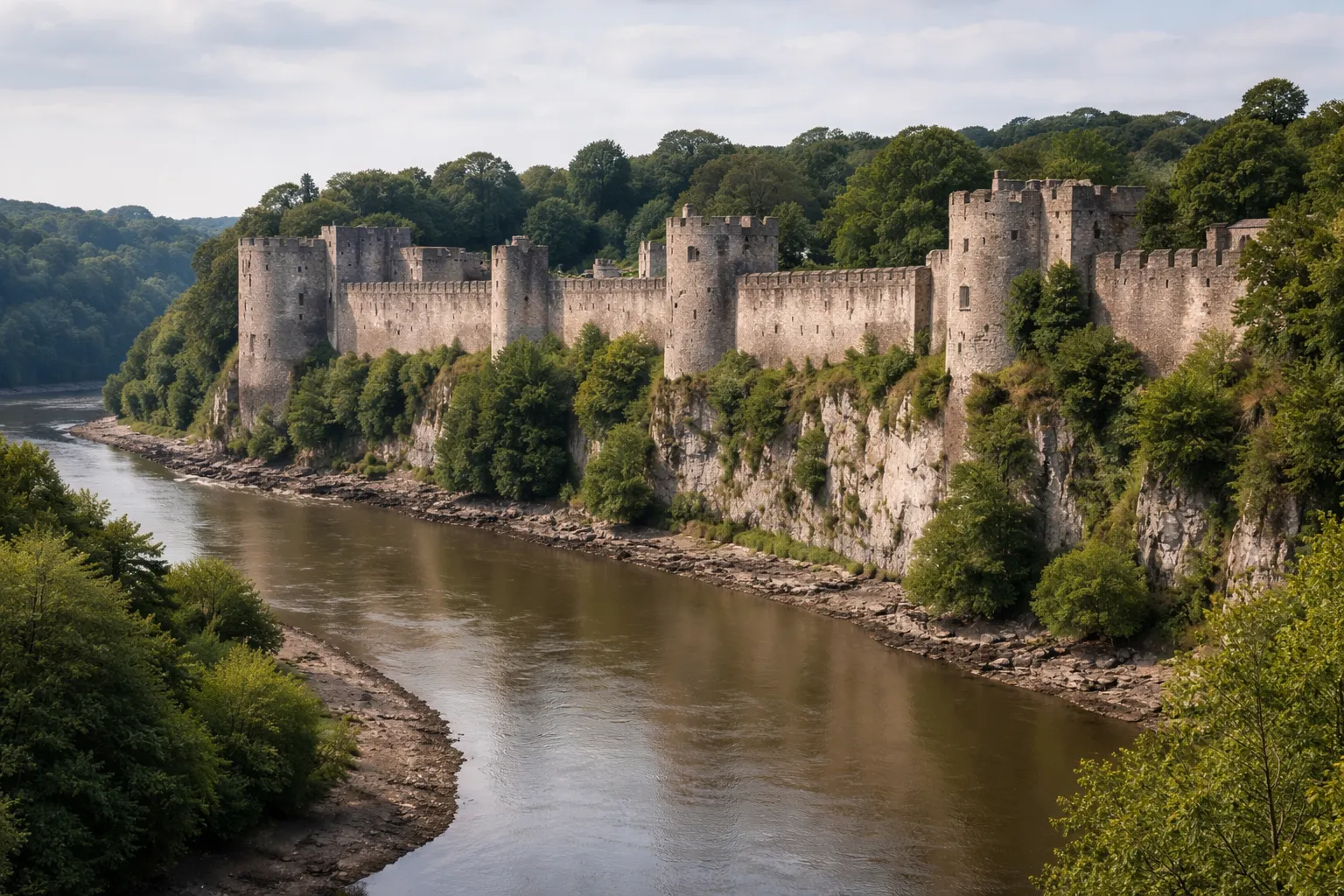
As you approach, the land drops away sharply toward the River Wye. The castle stretches along the cliff edge as if it has grown from the rock itself. This is not a compact fortress gathered around a single keep. Rather, Chepstow is long, uncompromising, and deliberate — a statement of control pressed directly into the landscape.
From the outset, it feels less like a residence and more like a boundary made solid.
A Castle Shaped by Geography
The River Wye was not scenery. Instead, it was strategy.
Flowing below the cliffs, the river marked a natural border between England and Wales. Norman builders positioned Chepstow Castle to dominate this crossing point. As a result, trade, troops, and travellers all passed beneath its walls. This same use of geography as a defensive weapon also appears further upstream at Goodrich Castle, where the river again shapes authority and control.
Moreover, the sheer drop from the curtain walls to the river below remains one of Chepstow’s most striking features. Even today, the site makes it immediately clear that the builders intended the castle to intimidate as much as to defend.
Walking the Walls
Moving along Chepstow’s walls feels different from other castles in the region.
Rather than circling a tight perimeter, visitors follow a long, linear route. It runs directly along the cliff edge. Towers and gates appear in sequence. Each one adds another layer of defence instead of repeating the same pattern. Consequently, the experience feels progressive. You are drawn deeper and deeper into the fortress.
Over time, centuries of expansion shaped Chepstow. Builders did not construct it once and leave it unchanged. Instead, they adapted it repeatedly as military needs shifted, adding new ideas in stone rather than tearing down the old.
The Gatehouse and the Weight of Authority
The gatehouse is where Chepstow’s authority becomes tangible.
Here, heavy doors, thick walls, and controlled entry points funnel movement through narrow spaces. Guards could observe and restrict anyone entering. This design did more than keep enemies out. Rather, it reminded everyone who passed through that they entered on someone else’s terms.
Standing here, it is easy to imagine iron striking wood and boots echoing on stone. There is also the quiet tension of waiting for permission to proceed.
Life Inside the Walls
Despite its severity, Chepstow functioned as more than a military structure.
Within the walls, halls, chambers, and working spaces supported daily life. Lords, soldiers, servants, and administrators moved through these rooms. They carried out the routines that allowed the castle to operate as a centre of power rather than a static monument.
In contrast to the exposed cliffside walls, the more sheltered interior spaces reveal the castle’s dual nature. It was outwardly defensive, yet inwardly organised and purposeful.
A Castle of Borders and Control
Chepstow Castle’s true strength lies in what it represents.
Builders raised it to control a border and project authority into contested land. They also used it to remind both sides of the river where power resided. Like other major Marches strongholds such as Ludlow Castle, Chepstow prioritized dominance and visibility over comfort.
As a result, every wall, tower, and change in elevation delivers the same message. This place was meant to be held.
Chepstow Castle Today
Today, Chepstow Castle rewards slow exploration.
Visitors planning a trip can find opening times, access information, and conservation details on the official Cadw site for Chepstow Castle.
Take time to walk the full length of the walls. Pause at the cliff edge above the river. Notice how the castle’s shape responds to the land rather than imposing a neat design upon it. Ultimately, the experience becomes less about spectacle and more about understanding how medieval power worked in practice.
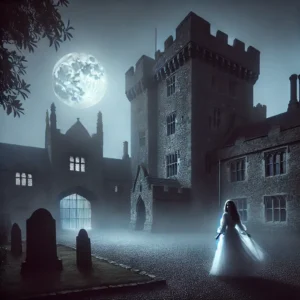
For readers interested in another side of the site, the legends and reported hauntings appear separately in my earlier post on Chepstow Castle ghost stories and folklore.
Chepstow does not ask to be admired from a distance. It demands to be walked.