
Edinburgh Castle History: A Fortress That Shaped Scotland
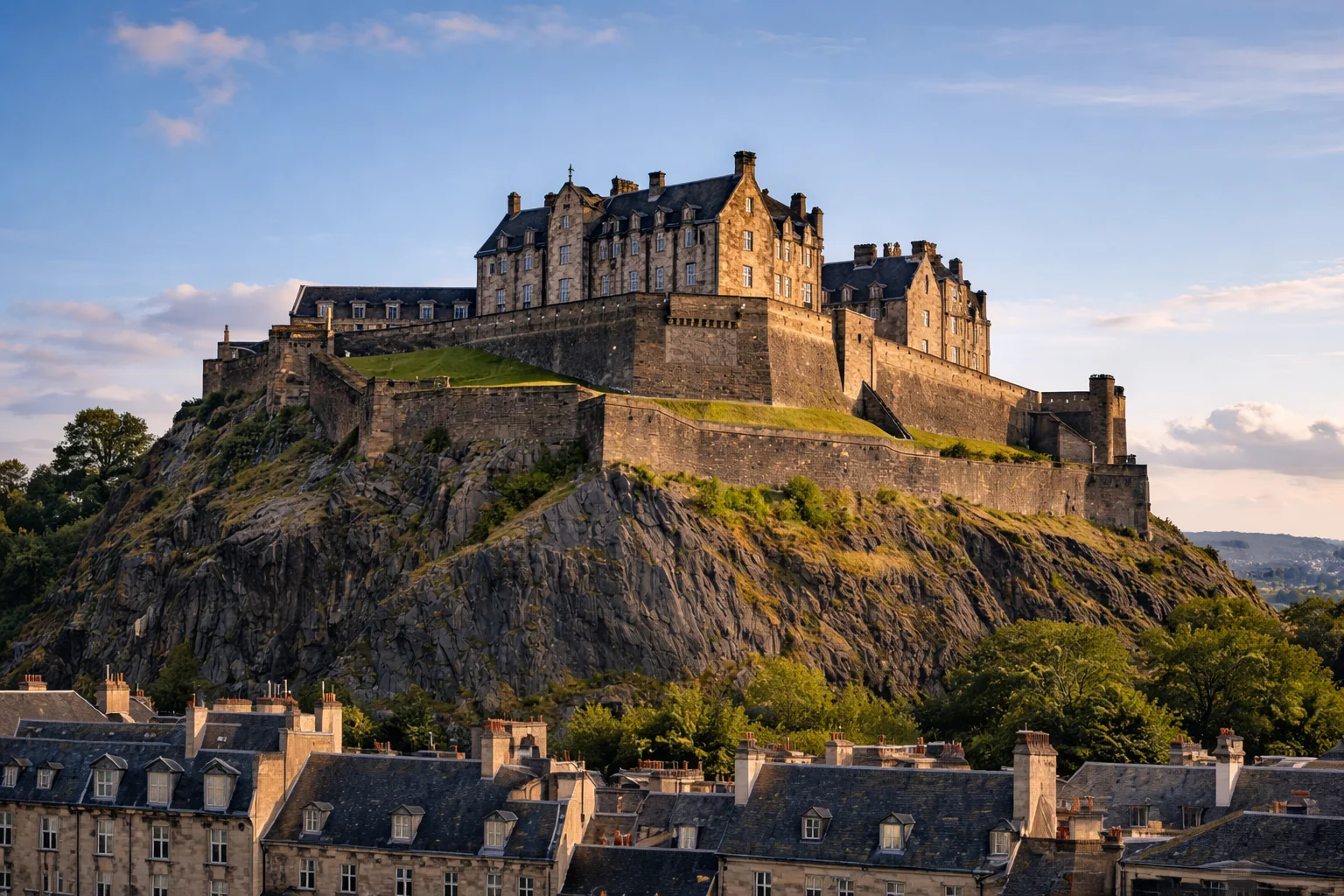
Edinburgh Castle history begins high on an ancient volcanic rock. Where the fortress dominates the skyline of Scotland’s capital. From this commanding position, Edinburgh Castle has stood at the Centre of power. Conflict, and identity for more than a thousand years. More than a royal residence or a military stronghold, the castle became a symbol of control — whoever held it held Scotland’s heart.
Unlike castles designed for comfort or display. Edinburgh Castle existed first and foremost to endure. Its purpose was not elegance, but authority. From its walls, rulers projected power over a city and kingdom that were often divided and unstable, knowing that control of the fortress meant control of the nation itself.
Castle Rock and the Foundations of Power

The strength of Edinburgh Castle lies as much beneath it as within it. Castle Rock, an extinct volcanic plug, rises steeply above the surrounding city, creating natural defences that shaped every stage of the castle’s development. Sheer cliffs on three sides limited access and forced attackers toward a narrow approach, where defenders held the advantage.
This geography dictated the castle’s character. Space within the walls was limited, forcing buildings to adapt to the rock rather than expand across it. Defences were layered and practical, shaped by necessity rather than design ambition. Rather than growing outward, the fortress evolved upward, bound by the hard edges of the landscape itself.
A Stronghold Under Constant Threat
Throughout its long history, Edinburgh Castle was rarely at peace. Its strategic importance made it a frequent target during internal struggles, foreign invasions, and wars of independence. Control of the castle often determined the outcome of wider conflicts, ensuring it remained one of the most contested strongholds in Britain.
Sieges tested more than stone walls. Life inside the fortress demanded patience, discipline, and endurance. Food shortages, isolation, and constant vigilance were as much a threat as any attacking army. Survival depended not only on strength, but on the ability to outlast those beyond the walls.
Like Warwick Castle, Edinburgh Castle was built to dominate rather than impress, designed to project authority and withstand prolonged pressure rather than provide comfort.
Royal Authority and National Symbol
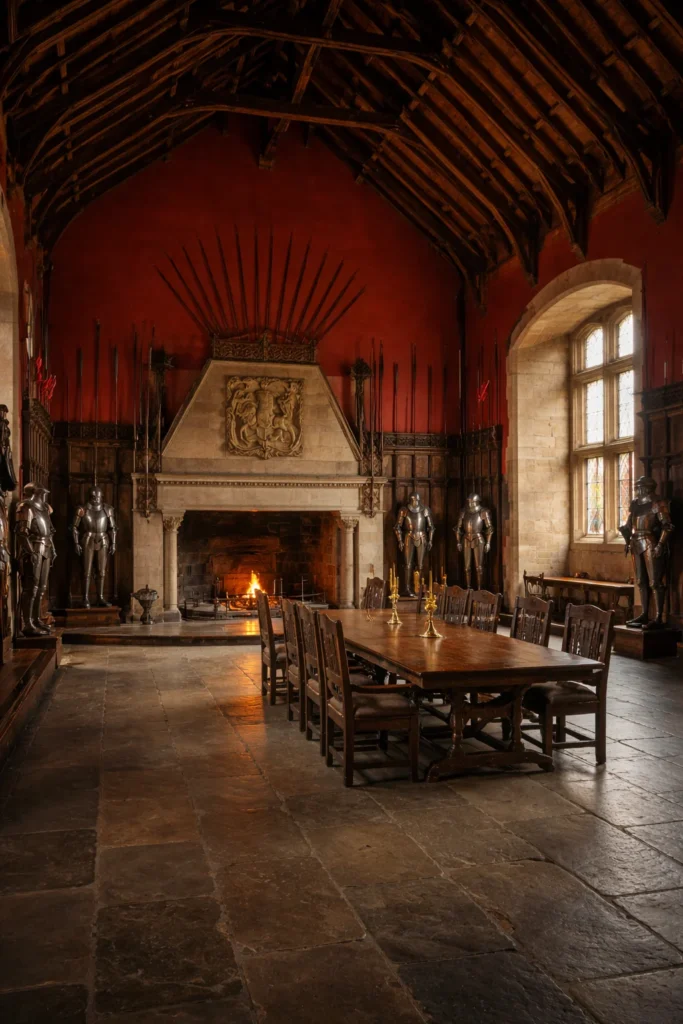
Beyond warfare, Edinburgh Castle served as a royal residence and a centre of governance. Kings and queens ruled from within its walls, using its elevated position to assert authority over a frequently unstable realm. Over time, the fortress became closely tied to the idea of Scottish sovereignty itself.
As military technology changed and the castle’s defensive role diminished, its symbolic importance only increased. What had once been a working stronghold gradually became a national landmark, representing resilience, continuity, and survival rather than active defence.
For conservation, research, and historical interpretation, the site is today cared for by Historic Environment Scotland, ensuring its long and complex history remains accessible.
A Brief Moment with Mary, Queen of Scots
Edinburgh Castle is closely linked to Mary, Queen of Scots, though her association with the fortress was brief rather than defining. In 1566, during a period of political tension and personal danger, Mary took refuge within the castle, where she gave birth to her son, James VI of Scotland. The choice of location reflected the castle’s continued role as a place of security at a time when loyalty was uncertain and threats were constant.
While Mary’s later life would be shaped by imprisonment, abdication, and exile, her time at Edinburgh Castle highlights a quieter aspect of its history. For a short period, the fortress served not as a battlefield, but as a protected royal space — a moment that would influence the future of both Scotland and England.
A Place That Never Fully Settles
Visitors today often describe Edinburgh Castle as impressive, imposing, and quietly unsettling. Wind moves through narrow passages, footsteps echo across stone floors, and silence gathers in corners built for watchfulness rather than rest. Even without belief in the many ghost stories associated with the site, the atmosphere is unmistakable.
Much of this unease comes from history rather than superstition. These walls were built for vigilance, not comfort. Generations of soldiers stood guard here, alert to threats that could appear without warning. Though the danger has long passed, the sense of readiness seems to linger.
A similar quiet unease can be felt at places like Pembroke Castle, where history alone is often enough to unsettle visitors.
Why Edinburgh Castle Still Matters
Understanding Edinburgh Castle history is essential to understanding how power, geography, and survival shaped Scotland itself. The castle is not simply a relic of the past. But a physical reminder of how landscape and ambition combined to influence the course of a nation.
Standing on Castle Rock today, it is easy to see why this fortress mattered. And why it continues to command attention centuries after its cannons fell silent.



Pingback: Mary, Queen of Scots: Power, Imprisonment, and a Crown Lost