Wigmore Castle History: Power, Ruin, and the Rise of the Mortimers
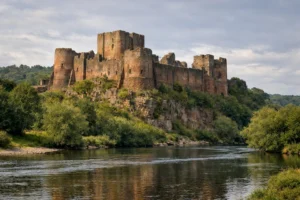
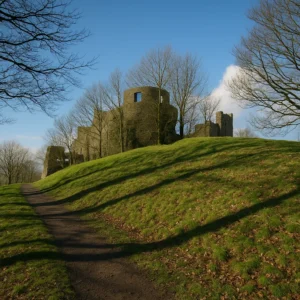
Wigmore Castle was never built to impress with towering walls or royal grandeur. Walking up the grassy slope toward this quiet Marches stronghold, it becomes clear that Castle was designed for control, authority, and long-term power rather than spectacle. What survives today may appear modest, but this site once stood at the heart of one of the most influential noble families in medieval England.
Where Is Wigmore Castle Located?
The site lies in north-west Herefordshire , close to the modern Welsh border. Its location rThe site lies in north-west Herefordshire…effects the realities of medieval life in the Welsh Marches—a region shaped by conflict, shifting loyalties, and uneasy coexistence between England and Wales.
Rather than dominating a dramatic hilltop, the castle occupies a low rise overlooking fertile land. This position allowed its lords to control estates, routes, and local communities, reinforcing authority through presence rather than sheer height.
Wigmore Castle and Its Norman Origins
Founded soon after the Norman Conquest in the late 11th century, the fortress began life, as a classic motte-and-bailey fortress. Timber defences were gradually replaced with stone as the castle’s importance grew.
Like other early Norman strongholds in the region, Wigmore was positioned to secure the borderlands around Herefordshire and the Welsh frontier, a strategy also evident in the now-lost stronghold of Hereford Castle.
Wigmore Castle formed part of a wider network of Marcher fortifications, a role more visibly expressed at Ludlow Castle, which later developed into a major administrative Centre for the Welsh borderlands.
The Mortimers of Wigmore Castle
Wigmore Castle is inseparable from the rise of the Mortimer family, one of the most powerful dynasties to emerge from the Welsh Marches. From this base, the Mortimers controlled vast estates, raised armies, and exerted influence that reached deep into English politics.
The castle is inseparable from the rise of the Mortimer family, whose most notorious member is explored in more detail in my separate article on Roger Mortimer.
At their height, the Mortimers rivalled royal authority itself. Though the ruins of the site appear understated today, they once represented ambitions that helped shape the course of medieval England.
What Remains at Wigmore Castle Today
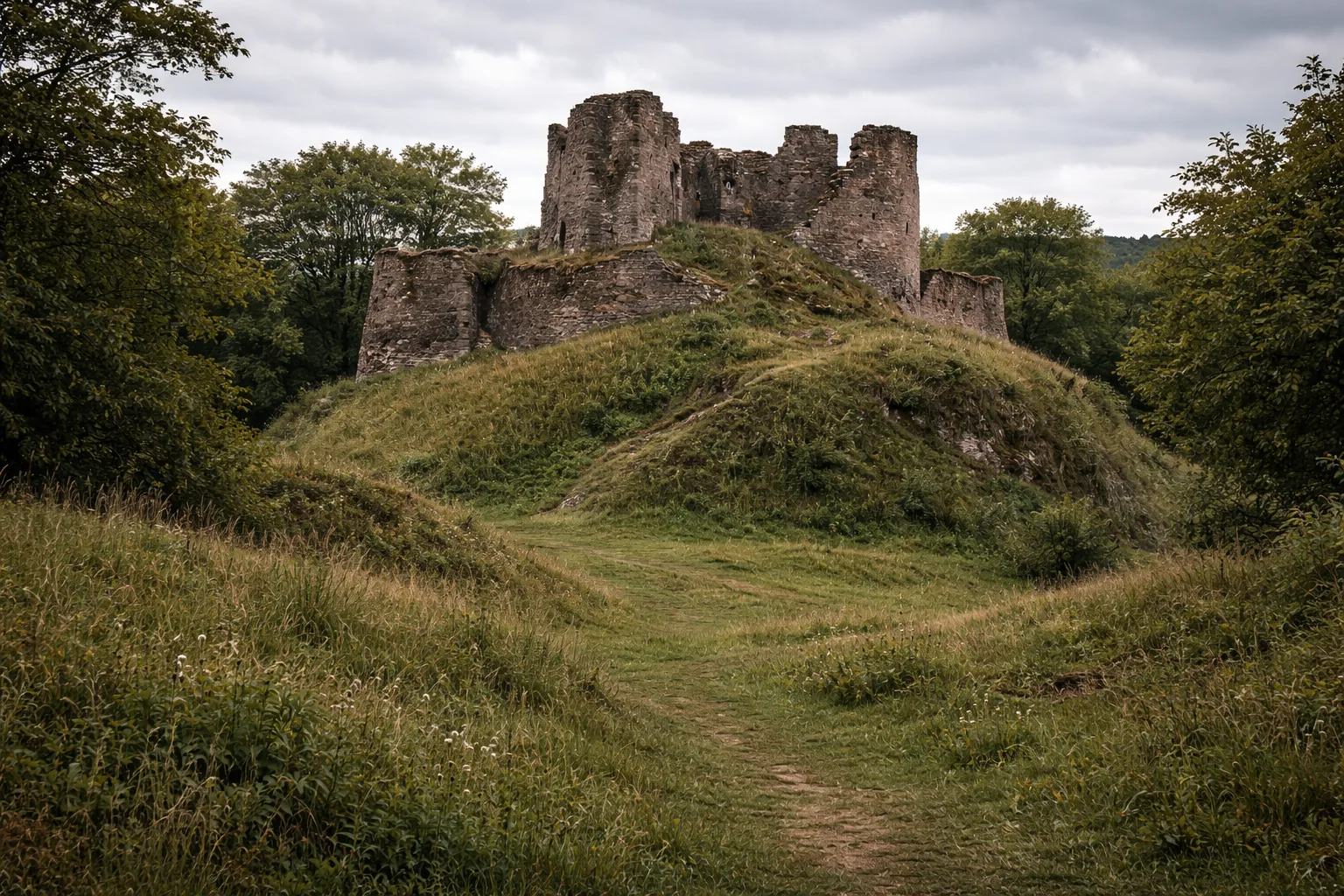
The castle is now an open ruin, free to explore and largely untouched by modern reconstruction. What survives is subtle rather than dramatic, rewarding visitors who take their time.
You can still trace:
- The earthworks of the original motte
- Low stone foundations of halls and towers
- The footprint of a working power base rather than a ceremonial fortress
There are no reconstructed walls or visitor centres here—just stone, grass, and silence.
Why Wigmore Castle Still Matters
Unlike famous royal castles built as statements of dominance, Wigmore represents the everyday mechanics of medieval power. This was a functioning castle—administrative, strategic, and deeply connected to land ownership and loyalty.
Its history offers a clearer picture of how power actually operated in the Welsh Marches, far from the pageantry of royal fortresses. Its story reveals how regional lords could accumulate influence strong enough to challenge the crown itself.
Visiting Wigmore Castle Today
Wigmore Castle is cared for by English Heritage, which provides official visitor information and historical context for the site.
- Access: Free and open to the public
- Facilities: None on site
- Best time to visit: Spring or early autumn, when vegetation does not obscure the earthworks
A visit to Wigmore works especially well alongside other Marches sites. Nearby castles such as Ludlow highlight the contrast between regional power bases and later administrative centres.
From Wigmore Castle, the story of the Welsh Marches continues south to Goodrich Castle, where increasingly sophisticated stone defences mark the next phase in the evolution of border power.