
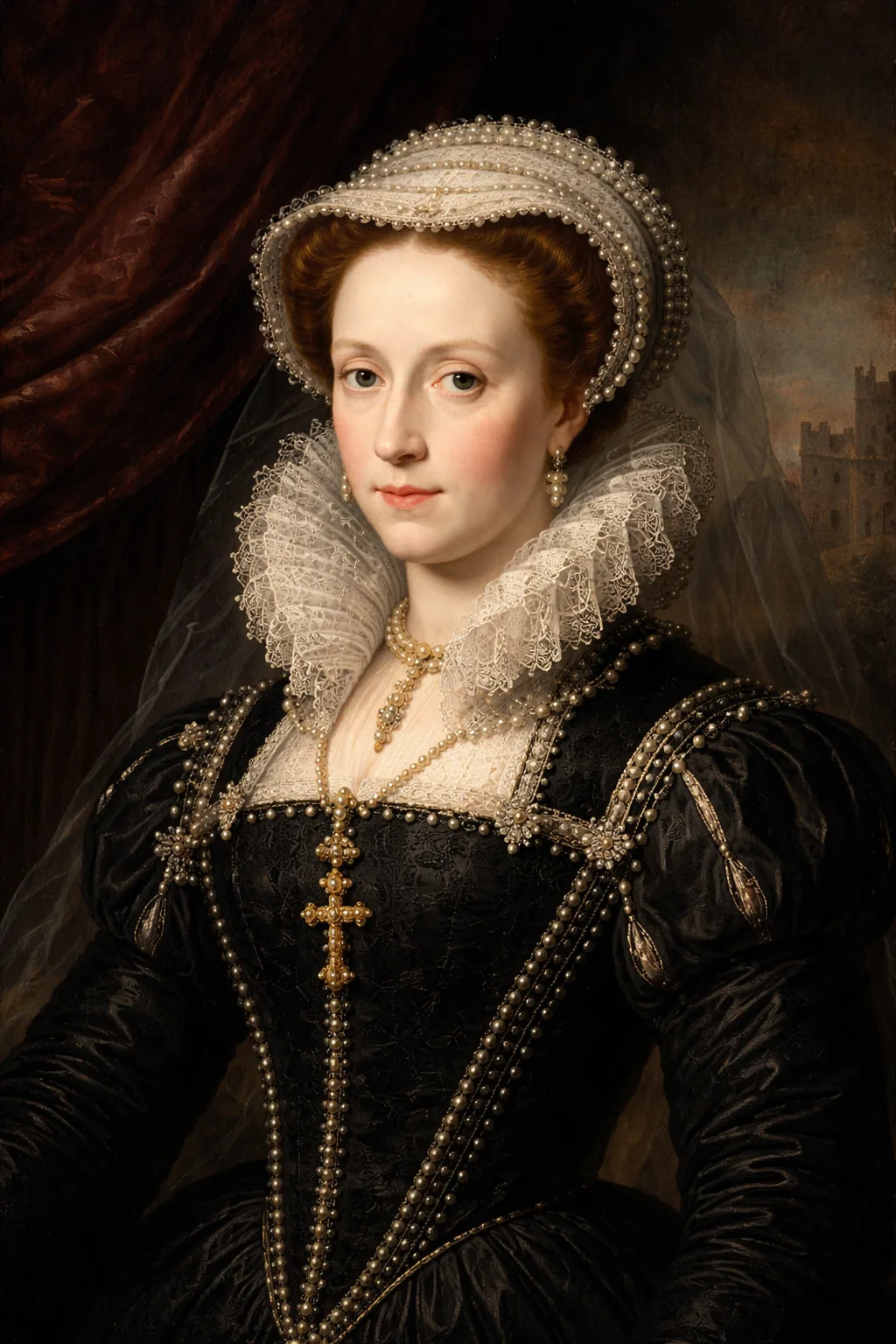
Few figures in British history embody the dangers of inherited power more clearly than Mary, Queen of Scots. Crowned as an infant, raised abroad, and ruling in a divided kingdom, Mary’s life became a long struggle between royal authority and political reality. Her story is inseparable from the castles that shaped her reign—most notably Edinburgh Castle.
Who Was Mary, Queen of Scots?
Mary became Queen of Scotland in 1542, just six days after her birth. From the beginning, her authority depended on regents and noble alliances rather than personal rule. Sent to France for safety, she was raised at the French court and briefly became Queen of France through marriage.
When Mary returned to Scotland as a young widow, she faced a kingdom transformed by the Protestant Reformation. A Catholic queen ruling a deeply divided country, her reign was fragile from the start.
Edinburgh Castle and Royal Authority

Edinburgh Castle
Edinburgh Castle stood at the heart of royal power in Scotland, towering above the capital as both fortress and symbol. For Mary, it represented legitimacy, continuity, and the authority of the crown.
It was here that she gave birth to her son, James VI, a moment that secured the future of Scotland’s monarchy even as her own position weakened. Though Mary would lose her throne, the castle remained tied to her legacy through the child who would later unite the crowns of Scotland and England.
Edinburgh Castle did not merely witness history—it helped determine its course.
Other Castles in Mary’s Life
Stirling Castle
At Stirling Castle, Mary’s political decline became unmistakable. Her infant son was crowned king here while she still lived, marking the transfer of authority away from her and into the hands of regents.
Castles meant to protect the monarchy instead became stages for its fragmentation.
Marriage, Suspicion, and Abdication
Mary’s reign unravelled through a series of political and personal crises. Her marriages—particularly to Lord Darnley and later the Earl of Bothwell—sparked scandal and rebellion among Scotland’s nobles.
Following Darnley’s murder and growing unrest, Mary was forced to abdicate in favour of her son. The crown remained—but no longer belonged to her.
Imprisonment and Execution
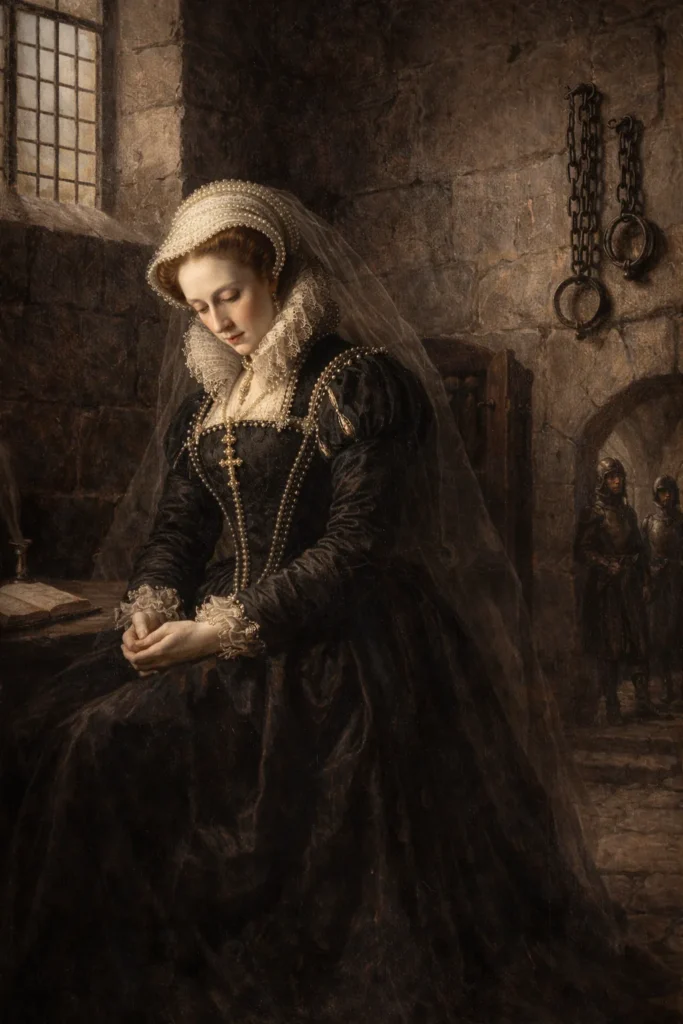
Seeking support, Mary fled to England, placing herself in the hands of her cousin, Elizabeth I. Instead of refuge, she found imprisonment.
For nearly two decades, Mary remained confined, viewed as a constant threat to the English throne. Accused of involvement in plots against Elizabeth, she was eventually tried and executed at Fotheringhay Castle in 1587.
She died a queen in title, but powerless in reality.
The Enduring Myth of Mary, Queen of Scots
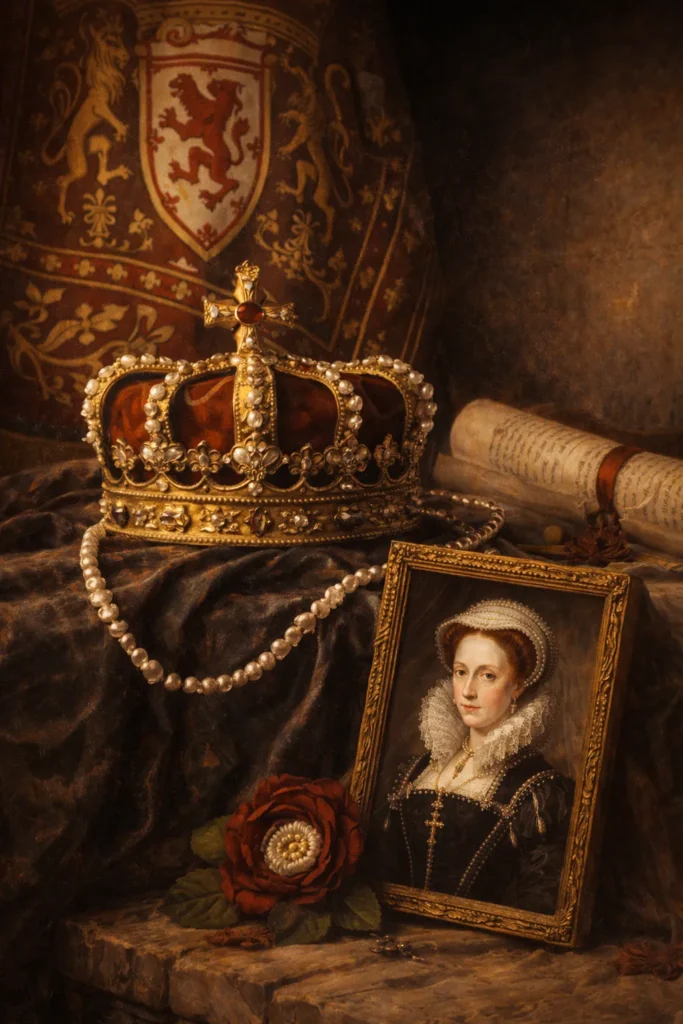
Mary’s story has endured because it reflects the vulnerability of monarchy itself. Crowned too young, constrained by religion and politics, and undone by circumstance, she became a symbol of lost authority rather than sustained power.
Medieval Britain also produced other figures whose reputations grew beyond their lifetimes, including Owain Glyndŵr, whose struggle for authority and identity left a lasting mark on Welsh history.
Where to Next?
• Explore the fortress that defined Scottish royal authority: Edinburgh Castle
• Discover Gwenllian ferch Gruffydd, the Warrior Princess of Wales
• Read about Sir Hugh de Chaworth, a knight of medieval legacy


Pingback: Rob Roy MacGregor: A Journey Through Outlaw Country